Appearance
Write a literature review
You'll end up with a review where every claim links to the passage it came from, and a Canvas board showing how the papers relate.
You need the papers in your library, as PDFs.
1. Gather the papers in a Collection
Create a Collection for the review, then Add to collection… each paper. To catch papers you add later, give it a dynamic source, such as Topic: Legged locomotion. See Collections.
2. Read and highlight each paper
Highlight the claims, methods and results that matter, and add a highlight note saying why. Each paper gets its own notebook, so you can reread your take on any paper in a minute.
3. Find what you might have missed
Use Search across the Collection's subject. Search by meaning finds passages that discuss your topic in other words: a paper about centre of pressure turns up when you searched for balance.
4. Compare them on a board
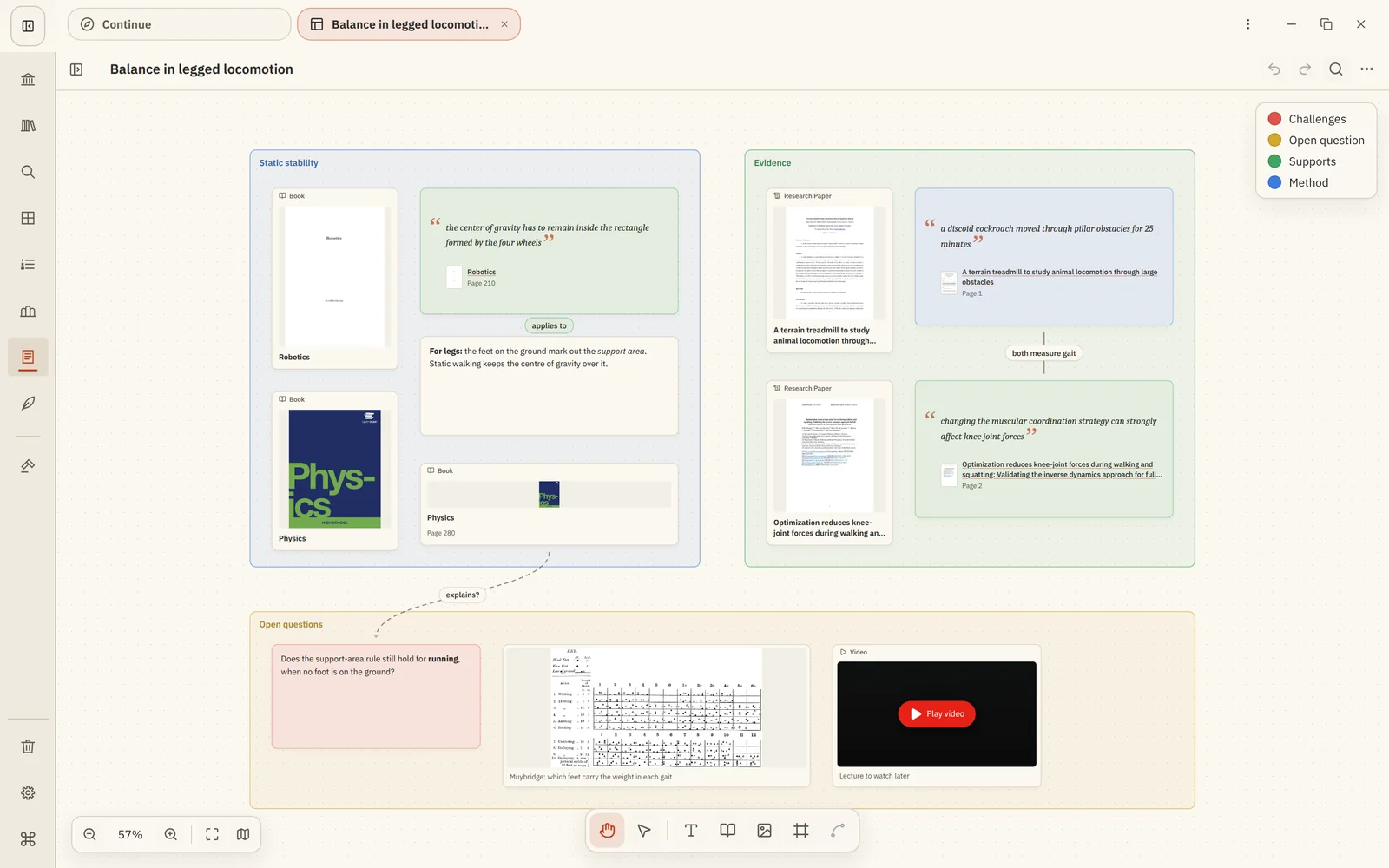
Create a Canvas board and add the papers as cards. Then:
- Paste the key passages as quote cards: select them in the reader, choose Copy as quote, and paste on the board.
- Group papers into frames by approach or by finding.
- Connect findings that agree or conflict, and label the connections.
- Name colours in the Colour legend, such as green for supports and red for challenges.
See How boards work and Frames and connections.
5. Write the review
Write the review as a note. As you make each point, paste a link to the passage behind it (Copy Link to Highlight in the reader). Readers of your note can Ctrl+click straight to the evidence. See Link to pages and passages.
6. Check it with the Agent
Ask the Agent: "Which papers in this Collection disagree with the claim in my second paragraph?" It answers with citations you can check, and any edit it suggests to your note waits for your approval.